Some coal generation is now doomed
I think we can now definitively say that some coal generation is doomed. Once 19 GW and 55 GWh of utility batteries are operating in the market, coal profits will be eviscerated. Drought may restrict hydro supply, particularly in Tasmania; wind may drop off; heat may lift demand — but even with all of that going their way, spot market revenue for coal generators will be down the toilet. It will be for gas as well of course but gas is basically designed to be turned off and on. Coal can’t do that, and carries $100s of millions of fixed cost.
Because it’s now certain, in my mind, that some coal generation is going to be uneconomic, a secondary conclusion is that the need and opportunity for more wind and solar are ever more obvious.
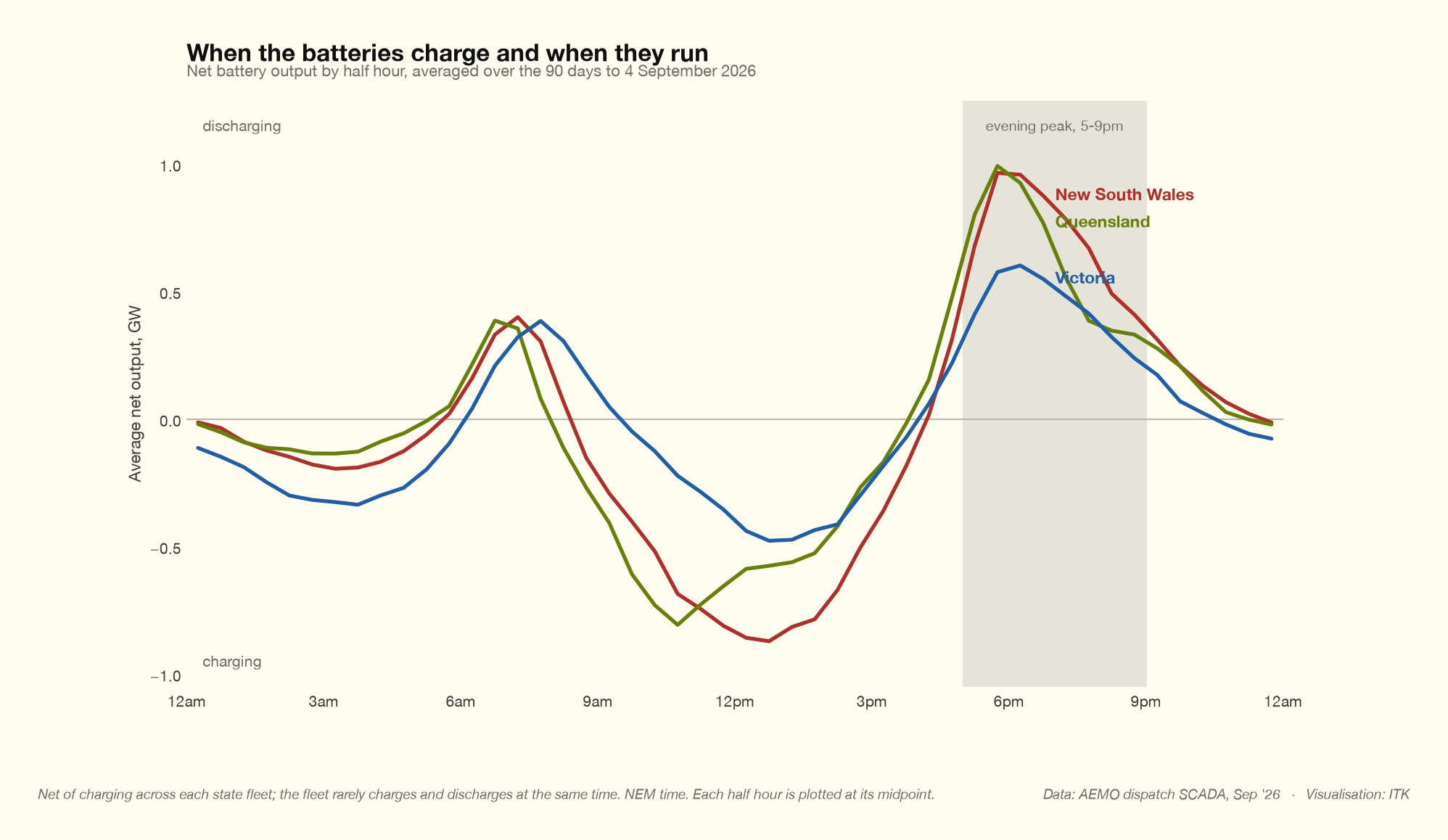
If all the new batteries were solely devoted to operating between 5 pm and 9 pm they would eliminate all the gas and up to 6 GW of coal demand in those hours. It won’t be that bad because the evening price outcomes are going to be so terrible that batteries will chase morning and even overnight peaks.
There is also now a reasonable chance that lunchtime prices will lift.
We are no longer running a South Australian experiment. Within two years the NEM will be further transformed.
However it also remains true that once coal generation does exit the system the headroom for batteries as well as for other bulk energy supplydepl will open right up again.
Spreading the output of what is being built now evenly over the evening peak hours lets us compare last year, this year, and what happens once the pipeline is running.
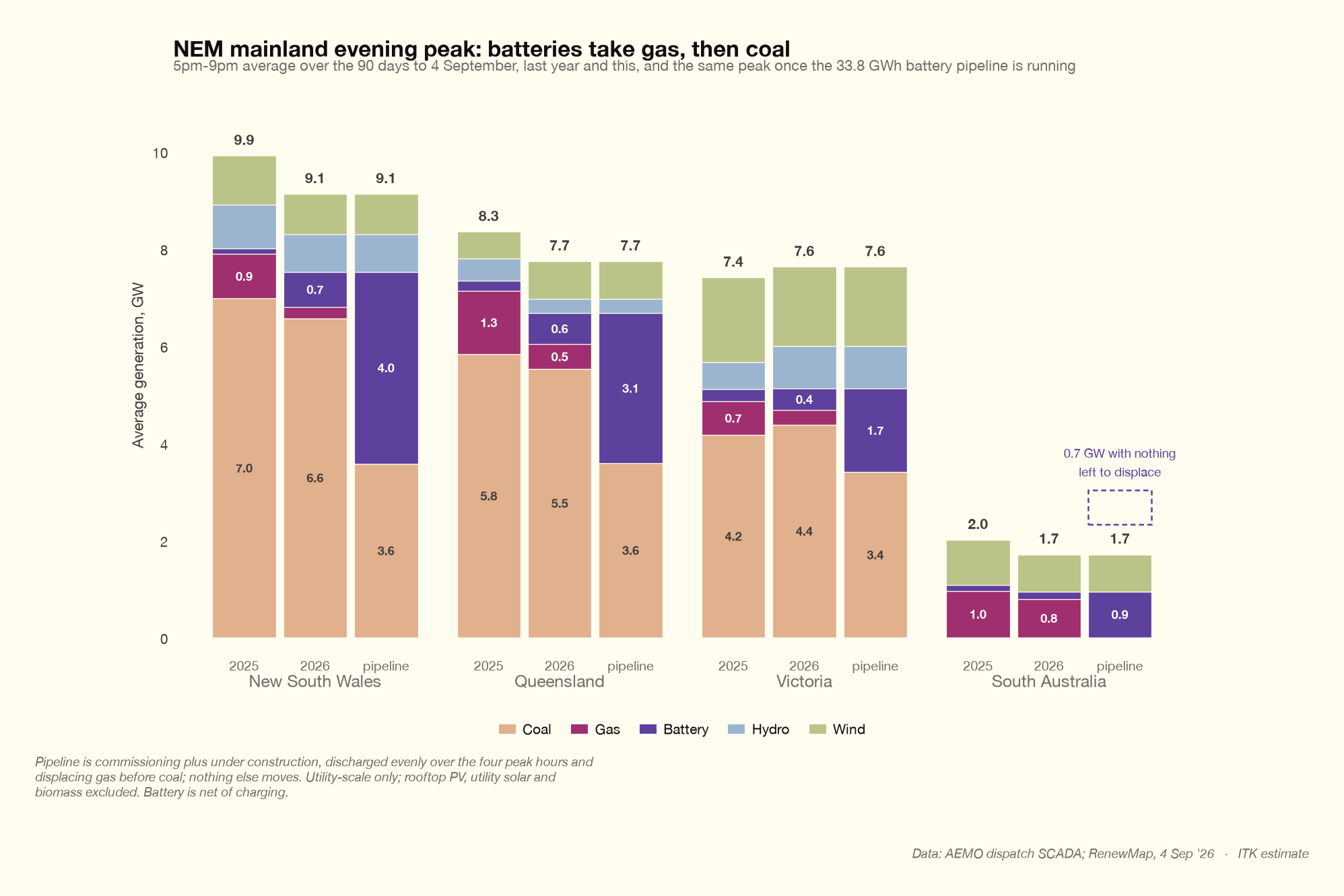
Up to 6 GW of coal is notionally displaced. Of course not all the gas will go away particularly in South Australia. It’s also possible that some of the hydro will be reduced.
Another thing to notice about the chart is how total demand has reduced. Part of that is probably due to a warmer Winter but it’s also likely that household batteries are playing a role and that this will continue to increase.
Peak prices have already collapsed but coal volumes remain largely intact
In February I wrote a note expressing a view that not only would batteries take away price and supplant gas volumes but eventually they would eat into coal volumes.
So far that has come true only to a modest extent. It’s most easily seen through ITK’s peak spot pricing year on year comparator. Across the NEM and using the last 93 days to give a fair view the impact so far has mostly been on price and gas volumes.
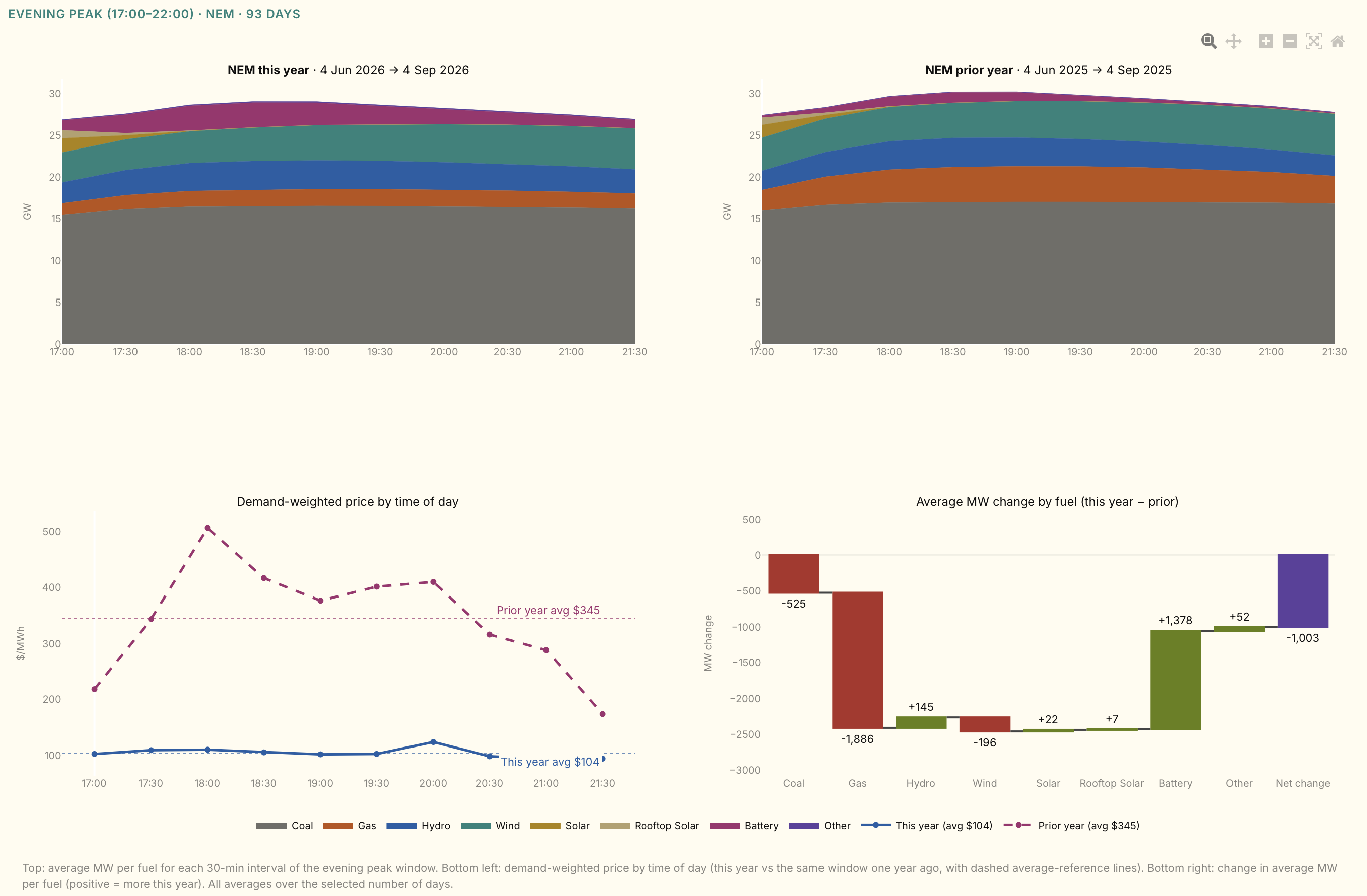
Even so peak prices have fallen across the NEM from $345 to $104 which, let’s face it, is pretty incredible. Gas’s share of the evening peak market has halved. And there is now very little gas left to be substituted.
But the second wave is coming
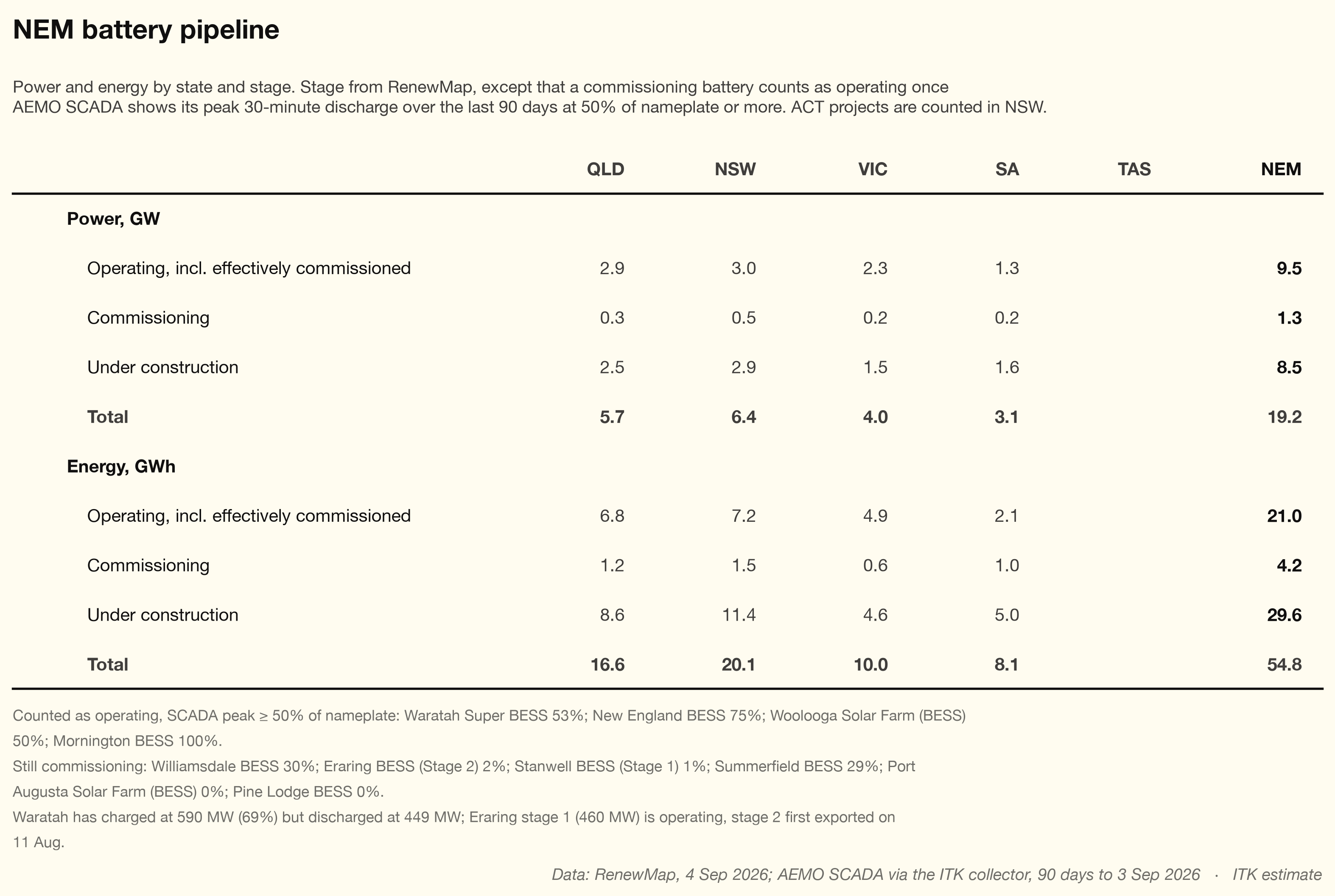
Using data from RenewMap you can see that as impactful as batteries have been the producer pain is set to deepen. Battery GW are going from 9.5 GW to 19.2 GW and GWh from 21 GWh to 55 GWh. Across each mainland state there is going to be a doubling of capacity and volume and in some cases more. In addition most of the second wave will be aimed primarily at trading, whereas at least some of the first wave of batteries had roles providing transmission services and system support and so less dependent on trading revenue.
Midday prices to rise but batteries will soon go through the remaining gas cover
In simple terms 10 GW of new demand trying to charge at lunchtime is equivalent to more than three years of rooftop solar growth. But there will be 4 GW of utility solar growth as well.
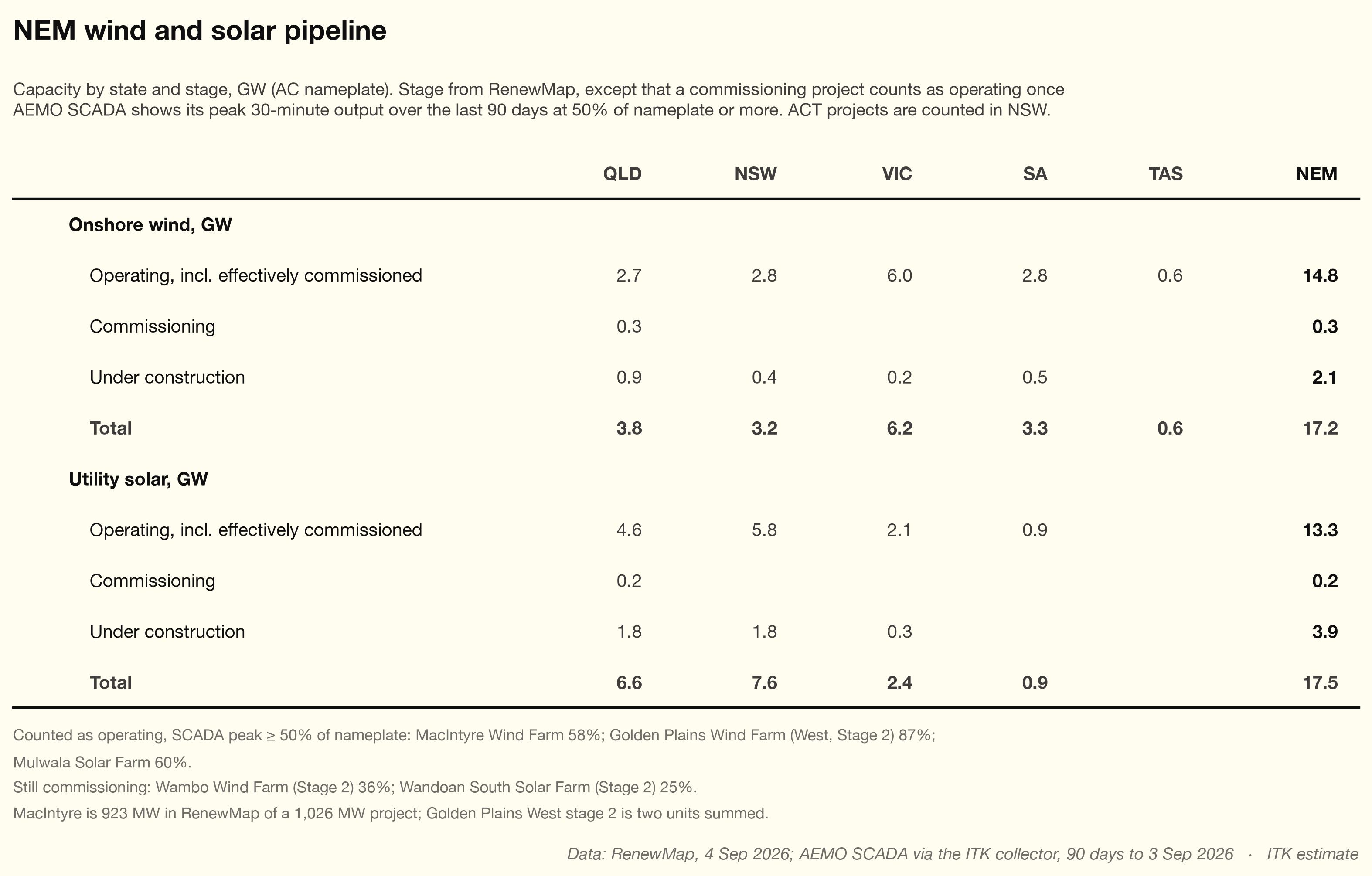
Even so when we take into account household batteries the numbers suggest that there will be enough headroom for curtailed wind and solar to operate more at lunchtime. The case for stronger lunchtime prices is gaining momentum.
But for a coal generator the bigger worry is that there are only 2 GW of average NEM wide gas generation left even in the winter evening peak — or at least what passes for winter in Australia these days. A good part of that is in South Australia. Wind generation will also increase a bit, and much of the remaining hydro is either in Tasmania or tied to irrigation releases.
It’s true that this Summer El Niño might restrict inflows, but hydro in Australia is much less run of the river than deep storage oriented.
Of course the evening peak displacement won’t work exactly like that. Some batteries will be reserved for the morning peak. Some may operate in the overnight market. So far mostly the batteries are used in the evening peak, then they recharge and attack the secondary morning peak.